Author: ZANEC

  • ZANEC POSITION ON THE REDUCTION OF FEES FOR PUBLIC SCHOOLS AND COLLEGES OF EDUCATION

    ZANEC POSITION ON THE REDUCTION OF FEES FOR PUBLIC SCHOOLS AND COLLEGES OF EDUCATION

    Zambia National Education Coalition (ZANEC) welcomes the position taken by the Ministry of General of Education (MoGE) through the Minister Hon. David Mabumba for bringing to fruition the reduction of fees in public schools and Colleges. The Ministers’ pronouncement to reduce fees in public colleges of education to K1,800 for boarders, K800 for non-boarders and K500 for the teaching practice is a positive move towards increasing access to higher education.

    However, ZANEC is concerned with the impact that this reduction will have on education service delivery, given the reduced funding to the Education and Skills Sector. As we are aware, most schools and colleges go for several months without funding from government. In the absence of funding from government, schools and colleges are mostly operating using contributions from parents only. Therefore, the reduction of fees without a corresponding increase in funding from government means that the schools and colleges will not have enough money to procure the much needed teaching and learning materials thereby affecting the learning outcomes. It is as a result of this that some college managements and PTAs have resorted to overcharging parents in order to meet the operational costs.

    It is on this account that we would like request government through the Minister of General Education to explain the current policy for financing the colleges of education. Is it supposed to be cost sharing or it is the parents alone who should pay the full cost of running our colleges? If the policy is cost sharing, why is government unable to pay its share of the cost of providing quality education in our colleges of education? We therefore call upon the Minister of General Education to assure education stakeholders that government will meet the funding gap that will be caused by the reduction of fees at school and college levels. Failure to do so, the policy pronouncements will have adverse effects on the delivery of quality education in our schools and colleges.

    We therefore restate our appeal to the government to ensure that the 2020 Education and Skills Sector budget increases to at least 22% of the national budget in order to ensure that policy pronouncements on the reduction of school fees and college fees do not hurt the quality of our education. We further call upon the government to share their immediate plan of how they intend to close the financing gap that will be caused by the reduction in fees at both school and college level.

    For/ZANEC


    George Hamusunga

    EXECUTIVE DIRECTOR


  • ZANEC PRESS STATEMENT ON REDUCTION OF TUITION FEES IN PUBLIC HEALTH INSTITUTIONS OF HIGHER LEARNING

    ZANEC PRESS STATEMENT ON REDUCTION OF TUITION FEES IN PUBLIC HEALTH INSTITUTIONS OF HIGHER LEARNING

    Zambia National Educational Coalition (ZANEC) welcomes government efforts aimed at increasing access to quality education in the skills sector. The decision announced by the Minister of Health Dr. Chitalu Chilufya that government will soon reduce training fees for nurses in all public training institutions from K18, 000.00 to K8, 500.00 per year will contribute towards increased access to tertiary education. Currently, the fees being charged in all tertiary institutions are too high for our learners. It is our hope that this gesture will be extended to other public tertiary institutions so that more learners from vulnerable and poor households can access their education and training from public institutions. However, we would like to advise the Ministry of Health to ensure increased funding to the targeted colleges in the 2020 budget so that the quality of education and training is not compromised by the reduction in fees.

    ZANEC further welcomes the pronouncement that government will standardize the timing for interviews for entry into these institutions because some candidates have been forced to attend multiple interviews where they are required to pay K300 for every interview they sit for. We therefore urge government to expedite the interview timing standardization process so as to allow for reduced application fees arising from the current interview structure. A lot of brilliant people in our country are denied an opportunity for tertiary education because of the high cost of application forms and sometimes interview fees which are non-refundable.

    The Coalition is however concerned with the call by the Minister of Information and Broadcasting Services Ms. Dora Siliya that public universities in the country must find ways of generating funds that will help them become sustainable as quoted in the Times of Zambia of 11th April, 2019. This statement by the Minister does not help the current situation obtaining in Institutions of Higher Learning. Being a former Minister of Education herself, she must be aware that Universities cannot just become financially sustainable overnight. Our view as ZANEC is that it is Government’s responsibility to fund public universities, including financing their financial sustainability plans.  Government should therefore begin by adequately investing in public universities before calling on them to be self-reliant. Necessary investment must also be made in the research units especially in the acquisition of appropriate equipment, technologies and building capacities of staff to make our universities become centers of excellence. In so doing, the institutions will ride on these capabilities to generate revenue for their self-reliance in the long run.

    Overall, we call upon government to show political will in funding our Education and Skills Sector by ensuring that it mobilizes the necessary finances to support our education system. Investing in education remains central to Zambia’s attainment of our Vision 2030 of becoming a prosperous middle income country.

    Finally, we would like to also call upon the government to immediately re-open the Copperbelt University as closing the institution will not solve the funding challenges that the institution is experiencing. We urge the Minister of Higher Education to open dialogue with the relevant University Managements and Student Unions so that they can collectively find solutions to the problems that higher learning institutions are currently facing.

    For/ZANEC

    George Hamusunga

    EXECUTIVE DIRECTOR

  • ZANEC PRESS STATEMENT ON THE FUNDING OF PUBLIC UNIVERSITIES BY GOVERNMENT

    ZANEC PRESS STATEMENT ON THE FUNDING OF PUBLIC UNIVERSITIES BY GOVERNMENT

    Zambia National Educational Coalition (ZANEC) is concerned with the prevailing situation at the public universities, namely the Copperbelt University (CBU) and University of Zambia (UNZA). The Minister of Higher Education is on record to have provided government’s position on the delayed payment of lectures’ salaries. The Coalition is aware that salaries are a recurrent expenditure that requires adequate administrative and financial planning in order to avoid work stoppage emanating from failure by government to pay salaries.

    ZANEC is concerned with the Minister’s remarks which called on the Lecturers at UNZA to resign if they were not happy with the delayed payment of salaries.  The Minister’s position does not provide opportunity for dialogue on solutions to the root causes of the critical financial challenges the sub-sector is facing.  We therefore call upon the Minister to be open to dialogue with key stakeholders affected including the management, lecturers and the students as opposed to issuing ultimatums. As a Coalition, ZANEC believes that dialogue is key to strengthening partnerships and fostering joint efforts in addressing the myriad of challenges that the institutions of higher learning are facing so that the goals set in the Education and Skills Sector Plans (ESSP) are achieved.

    Furthermore, ZANEC is also concerned about the 500 students who have been denied access to learning at CBU as a result of failing to pay tuition and related fees. This sad turn of events justifies ZANEC’s constant advocacy for increased financing to the sector. ZANEC is of the view that government and the management in Institutions of Higher Learning should not see enrolment as a revenue generation venture, but rather to increase access to tertiary education for all. As such, we call upon the Ministry of Finance and other institutions collecting loan repayments on behalf of the Loans and Scholarship Board to ensure the timeous remission of all the recoveries to the Loans and Scholarship Board to allow for the increased number of students who accessing the loans.

    Our recommendation is that the loan scheme should be accessible by all students that are accepted to enroll in institutions of higher learning and that the students should decide what type of loan they want to take since they will have to pay it back. As a Coalition, we are of the view that loans taken out by each prospective student should be based on the capabilities and need of the student as opposed to a blanket loan figure. The Coalition is calling for prospective students to be allowed to take out 100%, 75%, 50% or 30% as they wish since they will pay back anyway. Student Loans should therefore be based on the individual needs which may include meal allowances for those who need them.

    Further to this we call on the government to increase financing to the Education and Skills Sector to at least 22% in the 2020 national budget in order to allow for the effective and efficient management of the sector.

    For/ZANEC

    George Hamusunga

    EXECUTIVE DIRECTOR

  • PRESS STATEMENT ON THE GRADE 12 EXAMINATION RESULTS FOR 2018 AND RECRUITMENT OF TEACHERS TO BE DEPLOYED IN MADAGASCAR

    PRESS STATEMENT ON THE GRADE 12 EXAMINATION RESULTS FOR 2018 AND RECRUITMENT OF TEACHERS TO BE DEPLOYED IN MADAGASCAR

    1.0     RESULTS FOR THE GRADE 12 CANDIDATES

    The Zambia National Education Coalition (ZANEC) would like to commend the Ministry of General Education for releasing the Grade 12 examination results in good time. We are particularly pleased with the high pass rates in English, Mathematics, Social Sciences, Religious Education and Business Studies. The relatively high pupil performance recorded in technical schools and ordinary government schools is also commendable as most of our vulnerable children are enrolled in these schools.

    However, ZANEC notes with great disappointment the increased number of candidates who were absent from the Grade 12 examinations estimated at 1,916, with Northwestern Province accounting for the highest number. As a Coalition, we attribute this to the two main weaknesses in our education system.

    1. The ill preparedness of the pupils due to lack of meaningful teaching and learning taking place in our classrooms. Most of our pupils are progressing to Grade 12 without acquiring the relevant educational competences and mastery of the various subject contents. The only reason they get to Grade 12 is that they have been in school for 12 years. As a result, very few of them are confident enough to face the examinations.
    2. The enhanced security during the 2018 examinations. The stringent security measures that the Ministry put in place during the 2018 Grade 12 examinations should be commended. The measures contributed to the significant reduction in suspected cases of examination malpractices from 217 in 2017 to 77 cases in 2018. The resultant effect of this was that pupils who were hoping to smuggle examination materials in the examination rooms as well as those who were planning to write for other pupils by way of impersonation had no option but to stay away from writing the examinations.

    The Coalition is also concerned with the decrease in performance by the Grade 12 Candidates who obtained certificates from 64.84% in 2017 to 63.44% in 2018 as well as the reduced mean performance in science from 43.58% in 2017 to 34.32 in 2018. In order address this problem, government will need place a premium on the recommendations made by the stakeholders on the improvement of the quality of education in Zambia at the education transformation Conference launched by the two Ministers of General Education and Higher Education at Mulungushi International Conference center on 16th January 2019. Just to mention a few of the recommendations made are;

    1. The need to increase funding to the Education and Skills Development Sector to at least 27% of the national budget in order to ensure that all our schools are better resourced and equipped.
    2. There is also urgent need to review the relevance of the current curriculum which still promotes passing through memorization instead of promoting competencies relating to the acquisition of relevant practical skills.
    3. The Ministry also needs to urgently reduce the number of subjects that our children are taking as some of them do not add any value to the learners’ future prospects of contributing to socio-economic development.
    4. The Ministry must improve the quality of school managements at primary and secondary school level by making appointments competitive, on merit and performance based. Currently, there is no clear career path towards one becoming a head teacher at secondary or primary school levels.
    5. There is also need to introduce continuous assessments that can help in assessing the competencies of pupils to either progress or not progress to the next Grade.

    2.0     RECRUITMENT OF TEACHERS TO BE DEPLOYED IN MADAGASCAR

    The Zambia National Education Coalition would like to thank the President for responding favourable to the request for 500 English teachers by the Madagascan President. Currently, Zambia has enough trained teachers that can benefit from such opportunities. As we are aware, there are about 27,000 qualified teachers who are currently looking for employment against our annual recruitment target of 2,000 teachers. Our hope as ZANEC is that the Ministry of General Education will put in place some effective measures that will ensure that only the most deserving candidates are selected. As confirmed by the Hon. Minister of General Education, ZANEC is hoping that the selection process is going to be transparent and consider the gender balance so that only deserving teachers will benefit from this opportunity. The teachers that we are going to send to Madagascar will need to be good ambassadors of our Country if we are to have more teachers benefiting from this opportunity in future.

    Our concern however is that if government is going to send serving teachers to Madagascar, as we did to Seychelles, we need to be cautious to ensure that we don’t deprive our own children of the best quality of teachers that are currently serving us. As you are aware, we also do not have enough teachers in some of our public schools, let alone in community schools where majority of our teachers are untrained and working as volunteers. It is therefore our considered view that government should ensure that such opportunities are able to earn our Country some revenue which we can use to invest in our teachers back home in order to improve the quality of our education system.

    For/ZANEC

    George Hamusunga

    EXECUTIVE DIRECTOR

  • ZANEC PRESS STATEMENT ON THE GRADE 9 RESULTS FOR 2018 EXAMINATIONS

    ZANEC PRESS STATEMENT ON THE GRADE 9 RESULTS FOR 2018 EXAMINATIONS

    Zambia National Education Coalition (ZANEC) has noted that the grade nine (9) examination results have been released in good time despite the delay in writing caused by examination malpractices which led to the postponement of the examinations.

    It is, however, disappointing to note that the number of Grade nine (9) learners that obtained certificates were only 116,616 out of 255,449 representing 45.65% of the total candidates who sat for the examinations.  This means that 54.35% failed to make full certificates.  Furthermore, the number of the learners that have made certificates and qualified to grade 10 has decreased by 9.54% from 2017 where 162, 539 candidates qualified to Grade 10.  This is retrogressive to the development of our education system.

    The sad reality from the 2018 results is that there is a great likelihood that the postponement of the examinations had a bearing on the performance of pupils as well as on the number of candidates who sat for examinations. Therefore, leakages must be condemned by all well-meaning Zambians. As ZANEC, we reiterate that the issue of examination malpractices is a sign of moral decay in our society. Although we always blame the Ministry of General Education as the custodian of all examinations, the concerned learners and their parents should also bear the share of the blame. It is the responsibility of parents to ensure that their children study hard and prepare adequately for their examinations.

    ZANEC further notes with sadness that the number of learners that were absent from writing the Grade nine (9) examinations (29, 074 which is 10.22%) is too high.  We agree with the Ministry of General Education that learners’ absenteeism from examinations is a waste of national resources that government spends in printing and distributing examination papers. However, we wish to state that the sudden postponement of the examinations, although unavoidable, is also a cause of this absenteeism. This may especially be the case for our rural areas where learners live far from the schools and were as a result not adequately communicated to on the new examination dates. There is need for concerted effort in finding a lasting solution to reduce learner absenteeism from writing examinations.

    ZANEC is however happy to note that all the Grade seven (7) examination candidates managed to progress to Grade 8 which is a step in the right direction. We congratulate government for progressively increasing the number of Junior secondary schools as this has helped increase access at this level, thereby reducing the number of out of school children in Zambia.  There is need for government to replicate this at Grade 9 level in order to increase the progression rate from junior to senior secondary school level.

    Finally, ZANEC would like to recommend the following to the Ministry of General Education;

    1. There is need for increased investment in the vocational skills career pathway introduced in the 2014 Revised Curriculum in order to ensure that all Grade 9 examination candidates who cannot progress in the academic career pathway are absorbed accordingly.
    2. Government should support the upgrading of all the junior secondary schools to senior secondary school level to enable all Grade 9 examination candidates who obtain certificates to progress to Grade 10.
    3. The Ministry should also introduce competence based examinations which are important in the assessment of the readiness of pupils to progress to the next grade. That way, only competent pupils who are ready to progress to Grade 9 will be admitted in Grade 9 and allowed to sit for examinations thereby increasing the prospects of having all the examination candidates passing their Grade 9 examinations.
    4. There is urgent need for government to increase funding towards early childhood development as it plays a major role in preparing our children for formal learning. Current research evidence shows that children who go through ECD perform well in examinations.
    5. The Ministry should also deploy qualified teachers in all community schools in order to give the children the same education opportunity that children in public schools have since all the children write the same examination.
    6. The Ministry of General Education should put in place some stringent measures that will help in eliminating the recurrence of the 2018 examinations malpractices.

    For/ZANEC

    George Hamusunga

    EXECUTIVE DIRECTOR


  • THE ZAMBIA NATIONAL EDUCATION COALITION (ZANEC) FOURTH (4TH) MEDIA AWARDS

    THE ZAMBIA NATIONAL EDUCATION COALITION (ZANEC) FOURTH (4TH) MEDIA AWARDS

    CALL FOR ENTRIES FOR THE 2018 MEDIA AWARDS

    The Zambia National Education Coalition (ZANEC) is a Coalition of non-state actors working in the Education and Skills Sector. It is a recognized institution advocating for improved quality and access to education by all citizens. The organisation is involved in research and capacity enhancement on different aspects of the education system in Zambia.

    ZANEC invites journalists to submit articles or recordings for  Media Awards consideration from those that have demonstrated interest to report on education issues in Higher Learning Institutions, out of school children and Early Childhood Care and Development Eduaction (ECCDE). Entries are invited from electronic (Radio and / or Television), social,  print and online media.

    ZANEC believes that the media is a sustainable tool for advocating for the Coalition’s renewed mandate to promote and advocate for national and global education goals to address critical challenges affecting the education sector in Zambia. Thus, ZANEC is calling for individual journalists to submit entries for the the 2018 Media Awards to be held at the end of the year.

    The 2018 media awards will focus on:

    • Academic Freedoms in Institutions of Higher  Learning
    • Out of School Children
    • Early Childhood Care and Development Eduaction (ECCDE)

    All entries must indicate the name and conatct details of the writer, copy of the produced or published works, the media in which it was published and the date. The closing date for receiving entries is Wednesday,  28th  November 2018.


    Interested applicants should send their entries (electronic and hard copies) to.
    The Executive Director
    ZAMBIA NATIONAL EDUCATION COALITION
    Baptist Fellowship

    Cnr of Makishi and Great East Road
    P.O.BOX 30774
    LUSAKA
    Email: director@zanec.org.zm

  • ZANEC PRESS STATEMENT ON THE GRADE 7, 9 AND 12 EXAMINATIONS

    ZANEC PRESS STATEMENT ON THE GRADE 7, 9 AND 12 EXAMINATIONS

    Zambia National Education Coalition (ZANEC) is happy that the Minister of General Education (MoGE) has announced new dates for writing the examinations for grade 7, 9 and 12 that were on suspension. The move that the Ministry of General Education (MoGE) made was commendable and demonstrated that they are committed to their responsibility of preserving the quality of our education system. However, we are delighted that the announcement has been made for the examinations to be written because if the suspension was delayed it was going to affect the parents financially as well as the Examination Council of Zambia (ECZ).

    The issue of examination malpractice is a sign of moral decay in our society. Although we always blame the Ministry of General Education as the custodian of all examinations, the concerned pupils and their parents should also bear the share of the blame. It is the responsibility of parents to ensure that their children study hard and prepare adequately for their examinations. In most cases, it is the deviant children who are not committed to their studies who end up searching for leakages sometimes with the financial help of their parents.

    Another possible cause of malpractices is the lack of resources to ensure security of the examination papers when distributing them from the national level, district level and then school level. From experience, ZANEC has learnt that after the Examinations Council of Zambia has delivered the examination materials at district level, the District Education Board Secretaries (DEBS) have struggled to find funds for taking examination materials to their respective schools. As a result, the DEBS sometimes depends on the good will of the concerned school managements to have the examination materials delivered at school level. As a result, unsafe modes of transport such as ox-carts, canoes and bicycles are sometime used to carry examination materials to schools. This could be the source of compromise in securing examination papers. ZANEC therefore recommends that the Ministry of Finance releases adequate funding to the Ministry of Education for the administration of examinations.

    Currently, the performance of managers at all levels is based on the number of learners that pass examinations at all levels. Although this is important, it puts pressure on PEOs, DEBS and School Managers to ensure that the learners pass their examination. The Ministry should therefore put measures to ensure that schools continue to pursue good results using legitimate means.

    We hope that the stakeholders have learnt a lesson from the examinations that were suspended. Additionally, all stakeholders that are under investigations when found guilty of being involved in leakages should be dealt with severely by the law to serve as an example to deter others from involving themselves in examination malpractices.

    Finally, ZANEC is of the view that government needs to convene a stakeholders’ consultative meeting to look at the causes of examination malpractices and find a lasting solution to it.  This will help in addressing the root causes of examination malpractices and help preserve the confidence that we all have in our education system.

    For/ZANEC

    George Hamusunga

    EXECUTIVE DIRECTOR


  • ZANEC PRESS STATEMENT ON THE 80 SUSPENDED OFFICERS AT THE MINISTRY OF GENERAL EDUCATION (MOGE)

    ZANEC PRESS STATEMENT ON THE 80 SUSPENDED OFFICERS AT THE MINISTRY OF GENERAL EDUCATION (MOGE)

    The Zambia National Education Coalition is sad to learn that over K19.5 million meant for the provision of quality education for our children was mismanaged by the Ministry of General Education (MoGE). This explains the current weak state of public financial controls in our government as a whole and in the Ministry of General Education in particular. At a time when the share of the Ministry of General Education budget is experiencing a drastic reduction, it is inconceivable that the Ministry can be associated with the mismanagement of so much money. It is common knowledge that the education sector is currently facing serious problems including the poor supply of key education inputs such as teaching and learning materials, desks, teachers, classroom infrastructure, teachers’ houses, laboratories, water sanitation facilities and equipment. The situation is even worse for our children in community schools, who rely on untrained teachers that are working under very difficult conditions. As a result, we are experiencing an increase in the number of out of school children resulting from the failure by our poor parents to bridge the funding gaps perpetrated by a few selfish individuals.

    We therefore agree with the statement by the Acting Minister of General Education, Hon. Vincent Mwale, who in his address to Parliament on 10th October 2018 promised the nation that the K19.5 million will be recovered from the salaries and benefits of the 80 members of staff involved. Furthermore, we demand that the law should be applied fairly to the erring officers to ensure that they receive the due punishment in order to deter prospective offenders.

    In order to avoid the recurrence of such huge financial losses, we recommend that government decentralizes the Ministry of General Education’s budget management to the district level. We are aware that the Ministry of General Education is among the few ministries whose funds are still being administered from the Headquarters in Lusaka. We therefore call upon government to decentralize the management of funds as the centralized system is causing a lot of inefficiencies in the management of finances.  The centralization of funds has also resulted in late disbursements to Provincial and District offices thereby affecting the delivery of quality education.

    Finally, we demand to know what happened to the members of staff who were suspended in 2017 after being implicated in the Auditor General’s Report of 2016.

    For/ZANEC

    George Hamusunga

    EXECUTIVE DIRECTOR

  • TERMS OF REFERENCE -VIDEO DOCUMENTARY ON THE STATUS OF EDUCATION IN INSTITUTIONS OF HIGHER LEARNING

    TERMS OF REFERENCE -VIDEO DOCUMENTARY ON THE STATUS OF EDUCATION IN INSTITUTIONS OF HIGHER LEARNING

    1.0     INTRODUCTION

    The Zambia National Education Coalition (ZANEC) is a network of Civil Society Organizations registered under the Registrar of Societies Act on 3rd July, 2002 on certificate number ORS/102/35/2581. The organization currently has sixty-seven (67) Member Organizations comprising of Community Based Organizations, Faith Based Organizations, Non-Governmental Organizations, Student Unions and Teacher Trade Unions.

    The organization’s mandate is to coordinate civil society advocacy for quality, equitable and inclusive education for all Zambians.

    ZANEC’s vision is ‘A sustainable and inclusive education system that responds to national aspirations and fosters an environment for self-fulfillment. The mission of the Coalition is to promote quality and inclusive education for all, through influencing of policy, building consensus, holding duty bearers accountable, and strengthening the capacities of stakeholders in the education sector.

    ZANEC with support from DANIDA through Plan International Zambia intends to do a video documentary on the documentation of the score card in Chadiza and Vubwi Districts in Eastern Province.

    2.0     RATIONALE OF THE VIDEO DOCUMENTARY

    Zambia over the years has seen unprecedented growth in the number of students seeking higher education in public & private universities. Public universities are shrouded in high lecture, student ratios, little or more so no money for research and development let alone resources for management and administrative support.  Most recently some private universities and colleges have been challenged with matters of unqualified staff and poor service delivery. According to the ZANEC Status of Education report 2016, public universities are legally supposed to be autonomous and self-sustaining, they have continued to suffer from chronic budget deficits due to high operational costs coupled with large administrative and management costs. According to The World Bank Group (2015:7) “there is almost five times more nonacademic staff in the public universities per student than at the sampled private universities”. As a result, public universities are unable to attract funding from the private sector. Instead, they are heavily dependent on government funding which is also inadequate to ensure the delivery of quality education.  This scenario is the genesis of public institutions challenge to provide quality education in Zambian higher institutions of learning. The failure to be self-sustaining is the breeding ground for compromised provision of quality education and the ultimate realization of Academic Freedoms.


    ZANEC has been advocating for increased access, quality service delivery  and promotion of Academic Freedoms through SAIH funding since 2013. The project focused on promotion of access to higher education through advocacy for an operational Loans and Scholarship Scheme, promotion of Academic Freedoms among students  and lecturers, Strengthening the capacity of Students’ Unions for effective governance and engagement.


    Higher Institutions of learning in the Country have continued to be downgraded on the international rankings. It is envision that this documentary will bring bare the key challenges and issues that these institutions face with the view to advocate for improved provision of education services in the institutions.

    2.1 Objective

    1. 1. Create an advocacy tool that will create awareness on the state of education in Higher Learning Institutions in Zambia.


     2.2 Specific Objectives:

    1. To produce video documentary that will raise awareness on the status of education in Higher Learning Institutions.
    2. Facilitate for the voices of the students and that of education service providers to be heard.


    3        SCOPE OF WORK

    Specifically the following will be the tasks:

    1. Work with the ZANEC Secretariat Staff to agree on content.
    2. Capture agreed upon institutions.
    • Conduct key video interviews with the government officials from the ministry of Higher Education, Lecturer and Student Union Leadership, Student from both Private and Public Higher Institutions. Project partners and key stakeholders of education on the good school project.
    1. Recording of learning environments and processes.


    4.0 DELIVERABLES AND DURATION OF CONSULTANCY

    The assignment is expected to be completed within thirty (30) working days timeframes to be jointly agreed between the ZANEC Secretariat and the Consultant, with the following deliverables.

    1. 8 days filming of the video documentary
    2. 5 days production of the video documentary
    3. 14th day draft video documentary presented to ZANEC and project partners
    4. 16th Day final video documentary delivered to ZANEC.


    5.0 REQUIRED COMPETENCIES

    • The consultant must have more than three (3) years of experience in video documentary production.
    • Proven track record in video documentary production.
    • Knowledge in video shooting, documentary and production.

    Deadline for applications is the close of business on 23rd October, 2018

    PLEASE SUBMIT YOUR APPLICATIONS TO:

    The Executive Director

    Zambia National Education Coalition (ZANEC)

    Baptist Fellowship Building

    Conner of Makishi and Great East Road,

    Plot 3061/2

    Lusaka, Zambia

    Telephone number +26011226422

    Mobile: +260976198152

    Or email: director@zanec.org.zm /

    admin@zanec.org.zm
     

  • ZANEC PRESS STATEMENT ON A STUDENT THAT LOST HER LIFE THROUGH POLICE BRUTALITY

    ZANEC PRESS STATEMENT ON A STUDENT THAT LOST HER LIFE THROUGH POLICE BRUTALITY

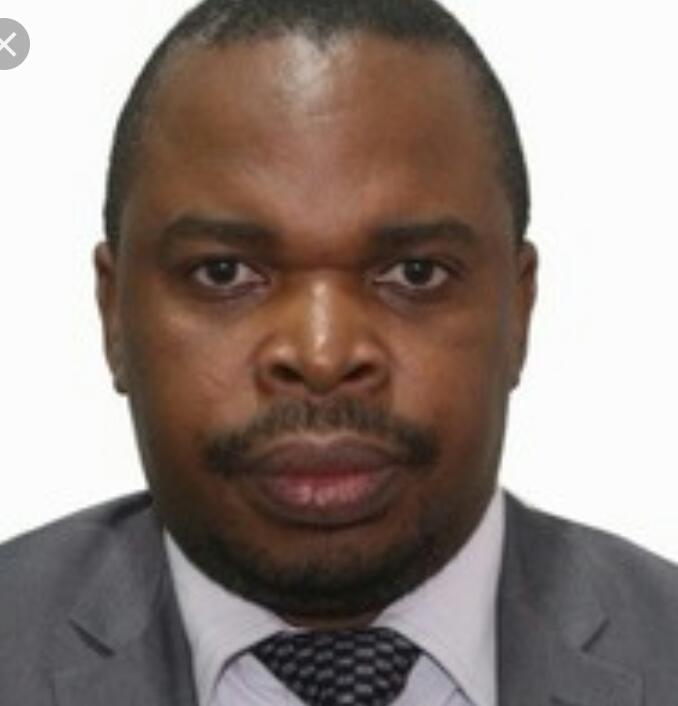
    Zambia National Education Coalition (ZANEC) is saddened by the death of a fourth (4th) year University of Zambia (UNZA) Education student Ms. Vespers Shimunzhila who died due to suspected suffocation during a riot at the University of Zambia on 4th October 2018.

    The loss of this future leader whose life her family had heavily invested in, is very disheartening. As a country, we have lost a teacher. In a country where we have only about one hundred thousand (100, 000) teachers against a population of over five million learners, Vespers’ death means more learners have been deprived of a much needed teacher!

    This situation could have been avoided if only the right communication channels were open. The continued intolerance of divergent views by government and the banning of students unions by the Minister of Higher Education (MoHE) is a cause of such problems at institutions of higher learning. Students are deprived of representation and therefore have no platform for dialogue on matters affecting them.  We demand that the Head of State intervenes by re-instating the Students Unions in order to ensure continued progressive dialogue.

    We condemn the behaviour of the police especially for the adverse crowd control methods they are using to resolve student grievances. It is our hope, as a Coalition that government will conclude its investigation soon and ensure that the responsible people are made to account.

    ZANEC recommends that a deliberate professional development program for the police be designed specifically for addressing a human rights based approach in handling differences at the higher learning institutions.

    Additionally, the banning of student unions is a violation of Academic Freedoms in the Higher Learning Institutions. Article 20 and 21 of the Constitution of Zambia (Amendment) Act No. 2 of 2016 states that “citizens have a right to freely assemble and express themselves”. According to the law, Student Unions can only be abolished if they are threatening national security. In our view, we feel that, this has not been the case. Dialogue with the students is a fundamental approach of addressing student grievances, other than using force and intimidation that suppresses the students’ Academic Freedom and rights.

    Lastly, we send our heartfelt condolences to the family and friends of Ms Vespers Shimunzhila and pray for a quick recovery for the injured students.

    For/ZANEC

    Mr George Hamusunga

    EXECUTIVE DIRECTOR