Category: News

  • 2017 WORLD TEACHERS’ DAY

    2017 WORLD TEACHERS’ DAY

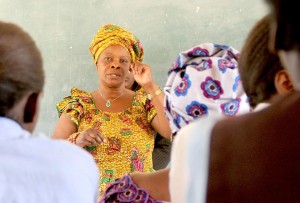
    Zambia National Education Coalition (ZANEC) joins the rest of the World in commemorating Teachers’ Day which falls on 5th October, 2017. As we are all aware, teachers play a very critical role in the Education and Skills Sector for social, cultural, political and economic development of any given country as they mould and prepare everyone.

    Indeed everyone has passed through a classroom of some kind.  It goes without saying that the teaching profession is at the center of any meaningful development of human resource. Therefore, ZANEC salutes teachers and lecturers that have labored and continue to educate the nation.

    This year’s theme “Teaching in Freedom Empowering Teachers” is well received as it contains two critical words: Freedom and Empowering. Freedom means the right to act while empowering means helping someone to realize their full potential. As ZANEC, we believe that a teacher and a lecturer should have the freedom to adequately teach and provide guidance to his or her pupils and students without fear or favor. On one hand empowerment means that effective teaching can only be made a reality if teachers and lecturers are empowered in terms of their earnings as well as continuous professional development.

    ZANEC notes with serious concern that the conditions of our teachers have remained unattractive. As such, the teaching profession has lost a lot of brilliant teachers to other professions as a result of poor conditions of service. It has also come to our attention that some private schools’ management in Zambia are taking advantage of our teachers by paying them very low salaries and subjecting them to bad conditions of service.  ZANEC therefore, urges government and Teacher Trade Unions to strongly advocate for better conditions of service for our teachers in private schools.

    We call upon government to ensure that teachers are given living wages and empowered with conducive teaching environments with sufficient teaching aids, increased teacher recruitment to mitigate against the high pupil teacher ratios to allow them execute their duties passionately and diligently. ZANEC is further concerned that in a statement by the Minister of General Education (MoGE) to Parliament it was stated that only 2000 teachers will be recruited in 2017. The Coalition

    is of the considered view that this will adversely affect and worsen the current high teacher pupil ratios in schools. This is because the 2016 Education Statistical Bulletin shows that a total number of 8,139 teachers left teaching in 2015 and 6,475 left in 2016. The reduction in the number of teachers recruited affects the quality of education when enrolment of pupils has continued to increase.

    One of the targets in the Sustainable Development Goal (SDG) number four (4) states that By 2030, substantially increase the supply of qualified teachers, including through  international cooperation for teacher training in  developing countries, especially least  developed countries and small island developing States.” The fact that teachers are fundamental for equitable and quality education means that teachers should be “adequately trained, recruited and remunerated, motivated and supported within well-resourced, efficient and effectively governed systems. For  Zambia to achieve this target, it is necessary not only to substantially increase the supply of qualified teachers but to motivate them by valuing their work through appropriate remuneration.

    We use this opportunity therefore, to commend the efforts by the Teaching Council of Zambia (TCZ) in ensuring that Zambia has qualified teachers in our schools. The Coalition hopes that TCZ will expeditiously put in place measures to ensure that our teachers in community schools are recognized and empowered like those in public and private schools.

    It is important to note that the 2017 Teachers Day commemoration also coincides with the commemoration of 20th anniversary of the 1997 United Nations Educational, Scientific and Cultural Organization (UNESCO) recommendation concerning the Status of Higher-Education Teaching Personnel. The recommendation underscores the necessity of academic freedoms and university autonomy for both teaching and research and articulates the rights academic staff should have. It is important therefore to add that lecturers’ academic freedoms are very critical for Institutions of Higher Learning to meaningfully contribute to national development.

    As we commemorate this year’s World Teachers’ Day, we challenge teachers and lecturers alike to critically reflect on their role as we are sadly confronted with reality of the fact that the quality of the pupils being produced in the Education and Skills Sector has gone down. This is evidenced by the 2016 Education Statistical Bulletin which indicates that the number of candidates that got full Grade 12 certificates declined from 125,686 in 2015 to 78, 337 in 2016.  We therefore, urge our teachers to ensure that they impart teaching that will impact on learners beyond examinations to applicable knowledge and skills for everyday living and relevant to the current industrial needs.

    Lastly we wish all teachers including those in community schools and lecturers a fruitful 2017 Teachers Day.

    Grace M. Sinkamba

    EXECUTIVE DIRECTOR

     Issued on 5th October 2017
  • ZANEC Expectations  of the 2018 National Budget

    ZANEC Expectations of the 2018 National Budget

    As the nation looks forward to the presentation of the National Budget this week, Zambia National Education Coalition (ZANEC) expects the Ministry of Finance to consider allocating 22 percent of the 2018 national budget towards the Education and Skills sector instead of the 16.5 percent in 2017.

    ZANEC which is composed of 68 different education sector oriented Non-Governmental organizations (NGOs) has consistently emphasized on the need for Zambia to oblige to the minimum threshold of allocating of 20 percent as per Cairo Protocol and Global Partnership for Education where the government made  commitment to this effect.

    As key stakeholders in the Education and Skills Sector, the Coalition is glad that in his address to the second session of the 12th National Assembly President Edgar Lungu reaffirmed his desire to increase government support to the Education and Skills Sector where several commitments were made towards the sector. It is the Coalition hope that these bold statements will be actualized through the allocation of matching resources in the 2018 national budget for the Education and Skills sector.

    ZANEC is concerned that the current budgetary support to the Early Childhood Care Development and Education (ECCDE) is only 0.01 percent of the education budget. This allocation is inadequate to provide for the expected results and impact. Further to this,  the continued failure by Ministry of Finance to disburse all allocated funds and disburse allocated budgeted lines in a timely manner has not allowed the sub-sector to adequately provide quality services.

    We are impressed that President Lungu also told parliament that the government would continue supporting vulnerable female learners to access education through a bursary scheme project titled “Keeping Girls in School” where over 14,000 girls have since benefited. ZANEC would like to further implore the government to release funds in a timely manner for this inter-ministerial project and we would like to know how much we are spending on servicing the loan to this project. To further support female learners, the government in the 2017 nation budget announced the provision of sanitary towels in all government schools. We are yet to be furnished with detailed information on how many leaners have since benefited from this budgetary allocation.

    It is the Coalition’s considered view that the Ministry of General Education should sustain the recruitment of 5,000 as per plan and allocations. To this end we are concerned that in 2017 that ministry has only recruited 2,000 teachers. Zambia needs to close the teacher pupil ratio if we are to improve on performance, service delivery and learning outcomes.

    In its submission, the Coalition has proposed the sustenance allocation of K4, 000,000 particularly for community schools. The state of most infrastructure in community schools remains in a deplorable state, while the pupil / teacher ratios are still high and teachers are volunteers without any take-home-pay at the end of the month.

    There is also need to scale up support towards Inclusive Education in Zambia as most learners do not have learning and teaching materials. Inclusive Education for learners with special education needs requires specific and clear budget lines to support infrastructure development and procurement of Teaching Learning materials such as braille text books.

    ZANEC further urges the government to provide adequate budgetary location to the Youth and Adult Literacy Sub Sector which currently has huge imbalance in the distribution of literacy centres, with majority of them being in urban areas, while only a few centres have been opened in rural areas. It is for this reason that ZANEC would like to see an infrastructure allocation for this purpose.

    In its submission to the Ministry of Finance for 2018 National Budget, ZANEC stated that the Education and Skills Sector faced a challenge of delivering quality practical skills and hence hopes that the sub sector will be explicitly provided for in the 2018 budget. The Coalition specifically calls for increased allocation to the provision of specialized equipment for TEVET institutions which is currently dilapidated. This will provide for a human resource base that will be relevant to the market and a necessary prerequisite for National Development. The Skills sectors also focuses on Research and Development which cannot be possible with the current obsolete equipment in trade schools.

    ZANEC further expects that the allocation for loans and scholarships for vulnerable but viable students to  tertiary education will not only be limited to Copperbelt University and University of Zambia.

    As a Coalition that is mandated to provide checks and balances to the Government, ZANEC is further calling on the Ministry of Finance to ensure that in the 2018 budget financial year ALL allocations to the sector MUST be released on TIME and FULLY for guaranteed timely implementation and delivery of materials and services. ZANEC has observed that over the years spending agencies survive on supplementary budgets even when the allocated budgets have not been released fully.

    In the ZANEC analysis of the Auditor General’s Report for the financial year ending 31st December, 2015; the Coalition identified irregularities such as money not going to intended beneficiaries, unreceived School Grants, failure to deliver and distribute Teaching and Learning Materials, failure to correct contract sums, bloated payroll coupled with sheer wasteful expenditure. All these clearly highlight that the Ministry of General Education and the Ministry of Higher Educations’ loopholes in managing expenditure, which takes away the little allocated to the much needed resources from actual quality service delivery.

    The Coalition therefore calls on the Government to ensure that the resources provided to the Education and Skills Sector in 2018 are spent in a prudent and efficient manner that will allow for tangible changes in the Education and Skills sector for Zambia to attain its vision 2030 of becoming a “Prosperous Middle Income Country” as well as the African Union Agenda 2063 and the Sustainable Development Goals.


    Grace M. Sinkamba

    EXECUTIVE DIRECTOR

    Issued on 27th September, 2017


  • Statement on Government Decision to Split UNZA into University Colleges

    Statement on Government Decision to Split UNZA into University Colleges

    The Zambia National Education Coalition (ZANEC), a composition of 68 education and skills sector oriented civil society organizations has welcomed the decision by government to split up the University of Zambia in several specialized University Colleges for the purpose of improving efficiency. ZANEC supports progressive ideas and will monitor that this particular decision when implemented improves the quality of service delivery at the University of Zambia.

    ZANEC has always stood for promoting efficiency, quality and ensuring accountability in public institutions. It is clear UNZA has been lacking efficiency lately judging by the huge debt and unsatisfactory quality of education provided. This is against a background of ZANEC’s firm support of the Higher Education Act of 2013, whose objectives includes improving efficiency in the operations in Institutions of Higher Learning.

    It’s a clear that UNZA has been recording a drop in standards both in academics and administration because of the growth in size. The university has introduced a number of new programs and schools without getting the equivalent adjustments administratively.

    ZANEC is eager to see the details of the proposed splitting of UNZA into University Colleges. More importantly, we want to see this pronouncement translated into costs and timelines. We have been in contacted the Ministry of Higher Education to know the detailed modalities that this decision will take. We have been assured that the Ministry will get back to us once the Permanent Secretary receives official communication from Cabinet once this comprehensive feedback is received from the Ministry, we shall as a stakeholder take time to analyze and give our position.

    We believe, with commitment from the government as the major stakeholder in UNZA, we can still improve its operations. We hope that the measure will bring back the lost prestige and quality in academic production UNZA was once renowned for and hence a source of pride to all patriotic Zambians.

    This is a major decision that Cabinet has made and we are pleased that ‘improving efficiency’ has been given as justification for the idea.

    We therefore urge all stakeholder in the education and skills sector and those outside to take keen interest in such key policy announcements if duty bearers are to be kept accountable for each and every decision they make. Such decisions need to be monitored to the letter and spirit of their intended purpose.

    On behalf of the ZANEC members, we once more appreciate Cabinet decision and await the detailed breakdown of the implementation road map through the Ministry of Higher Education.


    ZAMBIA NATIONAL EDUCATION COALITION

    Grace B Manyonga

    Executive Director

    Issued on 17th August 2017

  • PRESS STATEMENT ON THE COMMEMORATION FOR THE DAY OF THE AFRICAN CHILD- 16th JUNE 2017

    PRESS STATEMENT ON THE COMMEMORATION FOR THE DAY OF THE AFRICAN CHILD- 16th JUNE 2017

    ZANEC is a Coalition of non-state actors working in the education sector comprising Community Based Organizations (CBOs), Faith Based Organizations (FBO’s), Non-Governmental Organizations (NGOs), Students Union and Teacher Trade Unions (TTUs) working to enhance the provision of education in Zambia. The membership of ZANEC currently stands at sixty-eight (68) Member Organizations spread around the country. As a Coalition, ZANEC is mandated to mobilize CSOs for a unified voice to influence change in the education sector.

    Today, June 16th 2017, ZANEC joins the rest of the world in commemorating the Day of the African Child that is being observed under the theme; “Accelerating Protection, Empowerment and Equal Opportunities for Children in Zambia by 2030 through Child Participation”. It is pleasing for the Coalition that this year’s theme is focusing on issues of protection, empowerment, equal opportunity and fostering child participation.

    On June 16, 1976, nearly ten thousand black students from Soweto, South Africa, marched on the streets of the city to protest on the quality of their education. This was to demonstrate their disapproval of the Black Education Act, which isolated students centered on their race. The day is each year commemorated to reflect on the massacre of the school children during the Soweto Uprising of 1976 who rejected the decision that was made without their participation or involvement. This shows how from way back children’s participation has been ignored in making decisions that impact on them. Since then, Day of the African Child is commemorated beyond race issues to include all other rights of the African child as espoused in the United Nations Convention on the Rights of the Child and the African Charter on the Rights and Welfare of the Child.

    Time and again ZANEC has been echoing the need for an inclusive education system that provides an enabling environment for children in Zambia. Children at all levels of the education system from Early Childhood, Primary, Secondary way through to tertiary level are faced with various challenges. Among some of the challenges being faced by the children include inadequate access to quality education, inadequate parental involvement in providing basic Sexual Reproductive Health Information to empower the children in the teen age group to make informed decisions, child marriages and inadequate platforms that are created to foster child participation to mention but a few of the challenges being faced by children especially those in the rural parts of Zambia. It is important for Child Participation to be fostered at all levels so that they can also have a voice on issues that affect them and provide solutions to those issues.

    ZANEC further expresses concern on the inadequate learning facilities for Children with Special Education Needs (CSEN). It is sad to note that these children especially at Early learning level are not being adequately catered for, less still not being provided for space to enable their participation at various levels. ZANEC calls on all stakeholders to ensure that children with Special Education Needs are provided with the needed support so that they are also able to fully enjoy the basic right of access to quality education services.

    ZANEC recommends coordinated efforts by Ministry of General Education, Ministry of Health and Ministry of Community Development and Social Welfare to work hand in hand so that children with special education needs are identified at any early stage to enable them access all levels of education.

    As we commemorate the Day of the African Child, ZANEC challenges every Zambian to join in fighting the predicaments faced by children of all age groups and play a role in addressing issues affecting children at household, school and way through to the national level. As the saying goes: “One’s child, is everybody’s child”.


    _____________________

    Grace B. Manyonga (Ms.)

    EXECUTIVE DIRECTOR

  • Up investment in girls education’

    Up investment in girls education’

    First Lady Esther Lungu has called for increased investments towards girls and women’s education covering early childhood to tertiary levels.

    Mrs. Lungu says access to education will create pathways to economic justice for vulnerable girls and women.

    The First Lady says education will also enable young women and adolescent girls to effectively participate in decision making at various levels in society.

    Mrs. Lungu said this when she addressed a high level discussion forum on Pathways to Economic Justice for adolescent girls and young women at the United Nations headquarters in New York.

    This is on the sidelines of the ongoing 61st Session of the Commission on the Status of Women Conference.

    The First Lady also called for the need to address gender disparities, and flawed labour practices, noting that pregnant women are usually discriminated against at work places.

    And Africa Union’s Goodwill Ambassador for Ending Child Marriages, Nyaradzayi Gumbonzvanda thanked Mrs. Lungu and the Zambian government for the political will towards enhancing the welfare of girls and women in Zambia.

    Mrs Gumbonzvanda bemoaned the continued illicit financial outflows of billions of dollars from Africa at a time the continent is facing huge drop outs of girls and women from schools..

  • Govt to better education

    Govt to better education

    Minister of General Education  Dennis Wanchinga says there is need to explore alternative ways of constructing school infrastructure and teachers accommodation.

    Dr. Wanchinga says expansion of school infrastructure is important so that children and young people are accorded the opportunity to learn.

    The Minister says the 2015 statistics show a discrepancy between the number of primary schools against the number of Secondary Schools.

    He was speaking this morning during the dialogue forum on cost -efficient school infrastructure.

    Dr. Wanchinga explained that the 2017 budget for education is Nine point Two Billion Kwacha and that only six point nine percent is on infrastructure.

    And Minister of Housing and infrastructure Development  Ronald Chitotela has challenged engineers to ensure infrastructure being put up is durable.

    Mr. Chitotela says he is concerned that during the 2016/2017 rain season, a number of schools across the country had their roofs blown off.

    Mr. Chitotela also expressed concern that Government will have to spend in excess of One Million U.S Dollars at KAZUNGULA Boarding Secondary school because the infrastructure and drainage system are not good.

    Meanwhile, Minister of Gender  Victoria Kalima has welcomed the move to dialogue on cost efficient school infrastructure saying there is need to have more schools especially in rural areas where a girl child has to walk a long distance to access education.

    At the same function. UNICEF Zambia Representative Hamid El-Bashil said the organisation is committed to help the ministry of General education so that more girls and boys access education.

    Mr. Ibrahim said UNICEF has helped construct Malabo primary school in the flood plains in western province.

  • Vodafone Zambia hails education in youth empowerment agenda

    Vodafone Zambia hails education in youth empowerment agenda

    Vodafone Zambia Chief Executive Officer (CEO), Lars Stork has stressed the important role education plays in equipping young people with the tools they need to flourish an increasingly digital Zambia.

    His comments came in view of Youth Day, which is commemorated annually on March 12, as an opportunity for governments and the private sector to draw attention to youth issues.

    “A key pillar in our strategy is a tremendous focus on the youth segment. In Zambia, roughly 60 per cent of the population is below 25 years of age, signalling an impressive pool of talent and immense capacity just waiting to be tapped into. The current trend in the use of digital media across the nation, in demographic terms, fully underscores the vital importance of supporting this segment,” said Mr Stork.

    Mr. Lars Storks – CEO Vodafone Zambia

    Mr Stork emphasised education is a powerful antidote to poverty and leaders in both the public and private sectors must seize every occasion to put their full support behind providing Zambia’s youth with a quality education, further paving the way for economic growth in the country.

    Therefore, the 4G operator, which has set up Wi-Fi hotspots in major institutions of higher learning to align advancements in technology with education, will be offering all students on the network with a 100 per cent Wi-Fi bonus to utilise on campus as they please.

    “Flexible learning and mobility is the future of IT. A good wireless network must be installed to allow schools to embrace this mobility to ensure learning is aligned with current technology trends. Almost all devices used for learning require a wireless connection or are wireless enabled.

    “What we’ve learnt is that Wi-Fi is no longer a luxury in education – it’s a key ingredient. There is data supporting the claim that poor Wi-Fi in colleges means an entire generation of technology, such as tablets, is not useable in classrooms, which puts limitations on learning. Therefore, Wi-Fi in education is vital,” added Mr Stork.

    Vodafone Zambia’s youth strategy is made manifest through a three-pronged youth strategy, which consists of a graduate development program, a student brand ambassador program, and a social media platform with primary focus on electronic learning.