
Category: Press Statement

  • ZANEC PRESS STATEMENT ON THE CALL FOR THE  IMMEDIATE REOPENING OF SCHOOLS

    ZANEC PRESS STATEMENT ON THE CALL FOR THE IMMEDIATE REOPENING OF SCHOOLS

    The Zambia National Education Coalition (ZANEC) is concerned that schools have remained closed from 20th March 2020 to date. We need to state from the offset that although the idea to close all schools in March was important and strategic, the continued closure of schools for five months now has a great potential of bringing about an education crisis that we have never experienced before. Our research conducted in all the provinces with the participation of key stakeholders sadly revealed that the reach of the alternative modes of learning that the Ministry of General Education is implementing is below 23%. Worse still, the research findings show that only children along the line of rail, mainly from rich households, are accessing the alternative modes of education designed to provide continuity of learning at home. While, children from rural and poor households have no access to alternative modes of education. The problem has been compounded by the refusal by the Independent Broadcasting Authority (IBA) to grant the Ministry of General Education (MoGE) a licence to air education radio programmes nationwide, on account that the Education Broadcasting Services (EBS) is registered as a community radio station. As you may be aware, radio in Zambia has a wider reach than both television and e-learning platforms. Our research also showed that E-learning and Television education programmes are only reaching a few children due to lack of internet, high cost of internet bundles, load shedding of power and lack of ICT equipment or gargets in general among our children.

    In view of this, we wish to emphasise that the cost of keeping the non-examination classes closed for five (5) months far outweigh the public health risks of reopening schools. Among others, the consequences of not reopening schools will manifest themselves in the following:

    1. The failure by all pupils including those in Grades 7 and 9 to progress to the next grade despite the huge investment government has made to sustain learning for examination candidates so far.
    2. The loss of competencies and skills among pupils in non-examination classes to the extent that it may be difficult to remediate thereby compromising on the quality of the learning outcomes among the learners.
    3. The failure by pupils to progress to their next grade next year will entail the change of the current policy on the enrolment age from 7 years to 8 years, a situation which will result in increased drop-out rates among the overaged children.
    4. The prolonged closure of schools has already led to widening inequality between learners from rural areas and poor households who are not accessing any alternative education at home and learners in urban areas who are accessing alternative education modes. This will further re-enforce the current gap between the rich and the poor thereby defeating the Seventh National Development Plan vision of not leaving anyone behind.
    5. Our research evidence shows that the removal of girls from the safe environment provided by our schools has led to increased child marriages and teenage pregnancies among non-examination candidates thereby potentially increasing the number of girls dropping out of school.
    6. There is also evidence of loss of interest in education by majority of our learners in non-examination classes resulting from their prolonged stay at home, a situation that may result in the failure by majority of them to report back to school if schools remain closed.

    It is important also to note that our research revealed that about 98% of the schools currently running examination classes are complying to all the public health prevention and mitigation measures contained in the two public health instruments issued by the Ministry of Health. It is for this reason that we believe that the Ministry of Health in collaboration with the Ministry of General Education have demonstrated adequate capacity and competencies in running classes amidst the COVID 19 pandemic. Therefore, we have no doubt that government has the capacity to put in place adequate prevention measures that can help ensure that our children are learning in a safe and healthy environment. We know that although it may not be possible for our children to practice social distancing, the prevention measures namely the putting on of masks, washing hand with soap regularly, sanitizing, regular disinfection of surfaces, enhanced community awareness on COVID 19 and the local monitoring of children’s adherence to COVID 19 prevention measures at school, home as well as on their way to and from school will suffice.

    Finally, it is for this reason that we would like to request His Excellence the President of the Republic of Zambia, Dr. Edgar Chagwa Lungu, to consider the immediate re-opening of schools.

    For/ZANEC

    George Hamusunga

    EXECUTIVE DIRECTOR
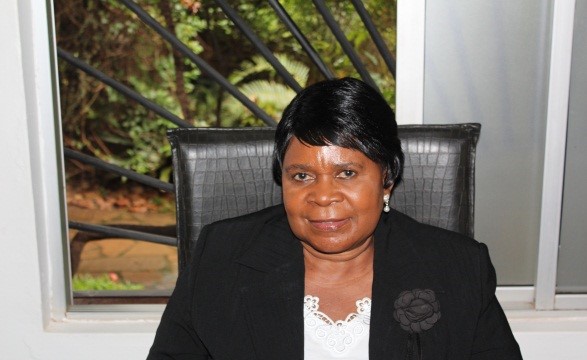
  • PRESS STATEMENT BY THE ZANEC BOARD CHAIRPERSON MRS. HARRIET SIANJIBU MIYATO DELIVERED ON 22nd  JUNE 2020 DURING THE LAUNCH OF THE MONITORING OF THE RUNNING  OF PRIMARY AND SECONDARY SCHOOLS EXAMINATION CLASSES DURING THE COVID 19 PERIOD.

    PRESS STATEMENT BY THE ZANEC BOARD CHAIRPERSON MRS. HARRIET SIANJIBU MIYATO DELIVERED ON 22nd JUNE 2020 DURING THE LAUNCH OF THE MONITORING OF THE RUNNING OF PRIMARY AND SECONDARY SCHOOLS EXAMINATION CLASSES DURING THE COVID 19 PERIOD.

    The President of the Republic of Zambia, His Excellency Dr. Edgar Chagwa Lungu, during his National Address held on 8th May 2020 directed that all primary and secondary school examination classes must re-open on 1stJune 2020. This landmark pronouncement which was made in order to avert an education crisis resulting from the prolonged closure of schools is progressive and requires the support of all stakeholders. However, the re-opening of examination classes requires a lot of investment in the sector in order to mitigate against the likely health risks of running classes during the COVID 19 period. As you may be aware, the Ministry of General Education has already invested a lot of resources in sustaining learning during the COVID 19 period through television education programmes and the provision of e-learning content on the ZAMTEL zero-rated internet facility. In addition, more resources are also required to invest in our learners in Early Childhood Education who are currently not benefiting from the ongoing learning programmes. Therefore, in line with the address by the President, the re-opening of Examination classes should be taken as a multi-sectoral responsibility that requires the support of all education stakeholders.

    It is for this reason that the Zambia National Education Coalition has partnered with UNICEF and the Ministry of General Education to conduct the school monitoring exercise using a participatory approach involving Provincial and District epidemic preparedness teams and the media among others. The proposed monitoring will nationally sample at least 500 schools that have reopened for Examination classes. The monitoring will help in generating empirical evidence on the existing gaps and local opportunities that can be tapped in order to bridge the existing gaps. ZANEC believes that with the unity of purpose, a lot can be achieved at local level in helping  our schools prevent COVID 19. To this effect, the school monitoring exercise will also be used to sensitize local stakeholders on the need to harness local resources from companies, organisations, businesses and individuals to support the improvement of public health standards in our schools.

    Finally, ZANEC would like to thank UNICEF and the Ministry of General Education most sincerely for the support rendered to enable us carry out this important monitoring exercise.  We would like to assure our Cooperating Partners, including UNICEF, that once the evidence on the existing gaps has been generated, we will still come back to you to ask for your help to enable us address some of the identified weaknesses.  With these few words, I now officially launch the countrywide school readiness monitoring exercise accordingly.

    Harriet Sianjibu Miyato

    ZANEC BOARD CHAIRPERSON

  • ZANEC Press Statement on the Commemoration of the International Day of the African Child, 16th June 2020

    ZANEC Press Statement on the Commemoration of the International Day of the African Child, 16th June 2020

    Zambia National Education Coalition (ZANEC) is pleased to join the rest of the world in commemorating the Day of the African Child which falls today the 16th of June, 2020.On this day, we remember the black students in Soweto, South Africa who were injured and died due to their brave action in defense of their right to education. Therefore, the Day of the African Child is designed to celebrate the children of Africa and demand for serious reflection and commitment towards addressing the various challenges relating to access to quality education across the continent and at country level. This year’s theme is “Access to Child Friendly Justice in Africa.”

    Access to child friendly justice primarily means children accessing the courts or having legal representation. However, despite the importance of access to justice for children, millions of children throughout Africa don’t have access to justice necessary for realizing their rights.  Children mostly do not receive the treatment they deserve as victims, witnesses or children in conflict with the law.  It is important for government to guarantee access to justice as a right for every child. Children need to be protected against abuse of any kind because their childhood experiences have great influence on their adulthood behavior. Therefore, it is important that children whose rights are violated against have access to justice and counselling in order to reduce the long term effect of child abuse.

    Access to Justice for children also entails providing children with information, knowledge and oversight on their rights to enable them to know, claim and secure their rights. Education is therefore at the center of access to justice for children as children need to be educated for them to know and claim their rights. As a result, education also plays a major role in opening children’s opportunities to realize other rights. Unfortunately, due to the COVID 19 pandemic, over 3 million children in Zambia alone are currently at home following the closure of schools. Therefore, the COVID 19 pandemic has taken away the most important right for our children, the right to education. It is for this reason that we are calling upon government and donors, in collaboration with all stakeholders to urgently ensure the safe and inclusive access to emergency distance learning, with enhanced psychosocial support and social emotional learning components both during and after the COVID 19 pandemic.

    Finally, ZANEC would like to wish all the African children great success as we commemorate their day today.  

    For/ZANEC 

    George Hamusunga

    Executive Director

  • ZANEC PRESS STATEMENT ON THE RE-OPENING OF UNIVERSITIES AND COLLEGES AMIDST THE COVID 19 PANDEMIC FOR GRADUATING STUDENTS HAVING EXAMINATIONS ISSUED ON 6TH JUNE, 2020

    ZANEC PRESS STATEMENT ON THE RE-OPENING OF UNIVERSITIES AND COLLEGES AMIDST THE COVID 19 PANDEMIC FOR GRADUATING STUDENTS HAVING EXAMINATIONS ISSUED ON 6TH JUNE, 2020

    Zambia National Education Coalition (ZANEC) welcomes the decision by the Minister of Higher Education to open Universities and Colleges for graduating students who will be writing their examinations this year.  It is important that graduating students finish their tertiary education so that the academic calendar is not disrupted.  We also commend the Minister for carrying out consultations with stakeholders before announcing the reopening of colleges and universities during the COVID 19.

    ZANEC takes note that the universities will open on 8th June, 2020 while TEVETA colleges will open on 1st July 2020. In our view, universities should have also been given ample time to prepare for the reopening because there is only two days before 8th June 2020. This is due to the fact that universities will be required to enforce the public health guidelines and meet certification guidelines as rightly guided by the President. This means that a lot of preparatory work and investment is required by the various universities to put the necessary prevention measures to mitigate against the likely health risks of running lectures during the COVID 19 period.

    We also agree with the Minister that e-learning should continue for non-graduating students who will not be writing final examinations because education is the backbone of any given society. However, ZANEC is aware that access to e-learning platforms remains limited to students that are residing in urban areas.  Therefore, majority of the students in rural areas and those from vulnerable households are left out due to lack of internet and finances to procure bundles. Therefore, it is important that universities provide a mix of ‘no tech and low tech’ solutions for sustaining learning during COVID 19. 

    ZANEC takes the opportunity to applaud the mobile services companies that are providing internet services for free to students for the purposes of continued learning during this COVID 19. It is a well-known fact that internet data is expensive for most of our citizens and worse still, for students who rely on their parents, guardians and sponsors to provide for them.  Therefore, we also make a humble appeal to other mobile companies that are not providing free internet data to e-learning portals to begin to do so as well.  Their support will go a long way in ensuring that no one is left behind. More so, cellphone companies must also use this opportunity to expand their networks by way of providing more telecommunication towers to avoid students climbing on trees and anthills in search of cellphone network.

    Finally, ZANEC is also pleased that international students will not need to travel to Zambia to learn but instead will write examinations on line.  This measure is in line with the current public health measures for the prevention and control of COVID 19.

    George Hamusunga

    EXECUTIVE DIRECTOR

  • ZANEC Press statement the 2020 Global Action Week for Education (GAWE) from Monday 18th to 22nd May 2020

    ZANEC Press statement the 2020 Global Action Week for Education (GAWE) from Monday 18th to 22nd May 2020

    Zambia National Education Coalition is delighted to join the rest of the World in commemorating the Global Action Week for Education (GAWE). GAWE is one of the key advocacy events for the education movement. However, this year’s GAWE is being commemorated at a time when the world is faced with a public health crisis of the COVID 19 pandemic. The impact of the COVID 19 pandemic has threatened the entire Sustainable Development Agenda, including Sustainable Development Goal 4 (SDG4) on education which has seen the closure of schools, colleges and universities in nearly 200 countries, Zambia included. The closing of schools has affected over 1.5 billion learners and has deepened the patterns of inequality and exclusion. The implementation of national plans such as the 7th National Development Plan, the vision 2030 and the Education and Skills Sector Plan (ESSP) are also greatly affected by the outbreak of COVID 19.  However, we should not let COVID 19 make us lose the many gains we have made in the sector. To achieve this, we need to ring-fence the resources allocated for the education sector and use them to sustain learning during the COVID 19 period. This is because education is one of the key sectors that cannot wait or put on hold.

    In line with this year’s theme for GAWE which is “Accelerating a collaborative response to the COVID-19 Pandemic”, we areurging governments and donors, in collaboration with national and international partners to urgently ensure safe, inclusive, equitable and right based access for all learners to emergency distance learning and psychosocial support during and after the COVID-19 crisis and this should include efforts aimed at ensuring the safe return of all learners to school after the pandemic.

    Additionally, by collaborative response we mean that everyone should be involved in mitigating the impact of COVID 19 on the education of our learners. We should not only leave the burden of providing and ensuring that learning is taking place to the government alone. All stakeholders should play their role in ensuring that all children are accessing learning via e-learning portal and television. Currently, our Early Childhood Education learners are not benefitting from these ongoing programmes.  Therefore, there is need for stakeholders to increase their support to enable the Ministry of General Education address the current learning gaps.  Parents and guardians should also continue playing their role of guiding their children’s learning activities at home.

    Finally, we urge all stakeholders to support the measures that our ministries of education have put in place such as the Education Contingency Plan for novel coronavirus (COVID-19).  No going backwards – Let’s Raise the Right to Education.

    I wish everyone God’s blessing as we commemoration the 2020 GAWE.

    George Hamusunga

    EXECUTIVE DIRECTOR

  • PRESS STATEMENT BY THE ZAMBIA NATIONAL EDUCATION COALITION (ZANEC) ON THE RE-OPENING OF PRIMARY AND SECONDARY SCHOOL EXAMINATION CLASSES DURING THE COVID 19 PERIOD ISSUED ON 9TH MAY, 2020

    PRESS STATEMENT BY THE ZAMBIA NATIONAL EDUCATION COALITION (ZANEC) ON THE RE-OPENING OF PRIMARY AND SECONDARY SCHOOL EXAMINATION CLASSES DURING THE COVID 19 PERIOD ISSUED ON 9TH MAY, 2020

    The directive by the President, his Excellence Dr. Edgar Chagwa Lungu, that primary and secondary school examination classes should re-open on 1st June 2020 is strategic and important in averting the looming educational crisis arising from the disruption of the academic calendar. However, the fact that schools will be required to enforce the public health guidelines and meet certification guidelines as rightly guided by the President means that a lot of preparatory work and investment is required in the sector to mitigate against the likely health risks of running classes during the COVID 19 period. To achieve this, only a multi-sectoral approach currently being applied in fighting COVID 19 can help realize this aspiration. The reason being that, the Ministry of General Education (MoGE) alone has neither the capacity nor the resources required to mitigate the likely impact of COVID 19 on education. Adequate funding will have to be made available to the schools as the current COVID 19 prevention measures cannot be implemented using the meagre resources from user fees. ZANEC will therefore monitor the schools to ascertain their readiness to admit pupils in examination classes and will engage the Ministry of General Education on the gaps that may be observed.    

    ZANEC also hopes that the Ministry will continue airing television programmes on both Top star and Free to air decoders in order to ensure sustained learning among the non-examination classes.  However, ZANEC is concerned that by using only one channel, the Ministry is not able to carry much content in a week. There is also need to promote the time table for the television education programmes in order to ensure that learners do not miss important programmes. We would also like to call upon the Ministry to expedite the process of airing education programmes on community radio stations in order to have more pupils benefiting from the lessons.

    Finally, ZANEC is of the view that the delivery of self-learning packs must be done to all learners in public, community, private and grant aided schools. Research has shown that learners at both primary and secondary school levels are not able to take adequate notes from educational programmes delivered through television and radio. The self-learning packs can therefore help in filling this gap and make such educational programmes more effective. Similarly, in an emergency disaster situation like the one we are currently in, good practice demands that government takes a rights based approach in the delivery of education in order to ensure that no one is left behind.

    George Hamusunga

    EXECUTIVE DIRECTOR

  • ZANEC Press Statement on the Opening of ZNBC TV 4 Education Channel on Topstar decoder

    ZANEC Press Statement on the Opening of ZNBC TV 4 Education Channel on Topstar decoder

    The Zambia National Education Coalition (ZANEC) welcomes the introduction of an Education Channel on the Zambia National Service Channel 4 by the Ministry of General Education which is being aired on channel 9 of the Topstar decoder.  This is a very progressive development to bridge the learning gaps caused by the closure of schools due to the COVID 19.  Indeed this channel will go a long way in helping and assisting our learners to learn while they are at home as well as prepare for examinations. The UN estimates that 1.25 billion children are currently at home as a result of the coronavirus lockdown. Therefore, the need to sustain learning from home should be a must. 

    It is important however to note that there is urgent need to widen the reach of the education channel by ensuring that it is aired on other decoders like Go TV, MUVI TV, DSTV and popular free to air decoders to allow for more learners with access to television to be reached. Furthermore, there is need for sign language interpretation in order to carter for the deaf learners in the spirit of leaving no one behind.  ZANEC is further concerned that the rural based learners, majority of whom are vulnerable and under-privileged will be left out on the lessons, as they do not have access to either the Topstar decoders or television in general. Therefore, we would like to propose that education programmes be extended to radio channels such as community radio stations as well as radio stations that reach all places in Zambia such as ZNBC Radio two and Radio one. The teaching for pupils in the lower primary level should also be in local languages, in line with the national education curriculum to allow for learners to understand.

    In our view as ZANEC it is actually the learners from vulnerable homes that need this service more. If Zambia has to leave no one behind as stipulated in the 7th National Development Plan and the vision 2030, it has to ensure that all learners are reached regardless of their geographical or social status. The approaches for sustaining learning at home should be all inclusive as provided for under Sustainable Development Goal (SDG) 4 which calls on states to ensure inclusive and equitable quality education and promote lifelong learning opportunities for all.

    The Coalition also appeals to the Zambia Electricity Supply Corporation (ZESCO) to reduce on the load shedding during the airing of the education programmes in order to produce positive results for our learners.  The statement by the Permanent Secretary Dr. Jobbicks Kalumba that printed education materials will supplement those that will be televised on TV and Radio in rural areas is very important innovation that should be supported by all citizens.  We therefore urge the Ministry of General Education to work swiftly in distributing the printed education materials to allow the learners in rural areas to have access to learning.

    It also becomes important to state that development is important for all areas in the country including rural ones. It is very sad that at this time and age in our country we still have places that have no access to electricity. It is high time that our government prioritized the development of our rural areas. We urge the Rural Electrification Authority to expedite the process of electrifying all our rural areas. History has shown that the use of computers by our learners did not work well because of lack of electricity and computers in our rural areas. Statistics have also shown that there is high staff turnover of teachers leaving the rural areas because of the same problem of development. It is sad that even areas that are connected to electricity are now subjected to load shedding, while most rural areas have remained without electricity. Whether we like it or not, the electrification of the entire country is important in order for our education system to be more effective and efficient.

    Education is key to success and therefore, ZANEC calls upon all stakeholders to support the effort by government by sponsoring education programmes to be aired on more community radio and television stations to enable more children benefit from this important intervention. In addition, more stakeholders can also help in the translation, printing and distribution of the learning material to rural or vulnerable learners.

    ZANEC would also like to take this opportunity to encourage parents and guardians to ensure that their children are learning while they are at home during this period when schools are closed because of COVID 19. Ensure that your children watch the ZNBC TV 4 Education Channel and better still encourage them to supplement what they are learning with reading.  Remember, educating a child is everyone’s responsibility.

    George Hamusunga

    EXECUTIVE DIRECTOR

  • ZANEC APPLAUDS GOVERNMENT FOR CLOSING SCHOOLS IN THE WAKE OF THE CORONA VIRUS THREATS

    ZANEC APPLAUDS GOVERNMENT FOR CLOSING SCHOOLS IN THE WAKE OF THE CORONA VIRUS THREATS

    WEDNESDAY, 17TH MARCH, 2020

    The Zambia National Education Coalition (ZANEC) is pleased with the decision made by government through the Ministry of Health to have all schools closed by Friday, 20th March, 2020. Given the destruction that the virus has left in affected countries, ZANEC believes that prevention is better and cheaper than cure. The fact that the disease has also been reported in our neighbouring countries further justifies the need to step up our emergency preparedness and prevention measures. It is also commendable that government has planned to use this opportunity to share information with learners, which they will in turn take to their homes and communities.

    As ZANEC, we would like to advice the two ministries responsible for education to issue instructions to all schools and colleges to ensure that they use the time between now and 20th March to develop some learning packages that will keep our learners pre-occupied with school work during the closure. To this effect, we would like to call upon the parents to realise that children will not necessarily be on holiday and therefore they will be required to support them to ensure that there is some level of learning happening in homes during this period. Similarly, for colleges and other institutions of higher learning, our expectation is that lecturers will continue supporting their students through e-learning to ensure that learning goes on during this period.

    Finally, it is our hope that government, through the Ministry of Health, will continue its surveillance on the Corona Virus and provide regular updates on the situation. This will help in ensuring that all learning institutions remain closed only for as long as it is necessary.

    George Hamusunga

    Executive Director

  • ZANEC Press Statement on the Post Youth Day Celebration Reflections 14th March, 2020

    ZANEC Press Statement on the Post Youth Day Celebration Reflections 14th March, 2020

    The outcomes from the just ended youth day celebrations show that a lot remains to be done to ensure that all our youths are empowered to take the mantle of leadership. It is therefore important to know that, although the celebrations are over, the work to change the prospects of our youths begins now. For youths to take the lead as the 2020 theme for Youth Day held on 12th March states, it is important that the education sector is made a priority in our Country. Education is fundamental to development and growth. Skilled human resource makes possible all developmental achievements, from health advances and agricultural innovations to efficient public administration and private sector growth. For countries to reap these benefits fully, they need to unleash the potential of the human mind, specifically for our youths to take the lead. There is no better tool for doing so than quality education.

    Education is a proven door to prosperity and critical thinking that allows for initiative even amidst many challenges. Education is therefore essential for individual growth economically, culturally, socially, and politically.  Education can accord our youths an opportunity to prosper in life and take up leadership positions regardless of their gender, ability, tribe and race.  For our country and indeed for any nation to prosper and have youths that take the lead, it is important to invest in inclusive education of high quality at all levels.

    It is important that all youths in Zambia have access to Basic Education (Primary and Secondary Schools). According to an analysis conducted by United Nations Education, Scientific and Cultural Organization (UNESCO), if all people completed secondary school, as called for by Sustainable Development Goal (SDG) 4, world poverty could be reduced by half. Additionally, countries like Japan have prospered economically because of huge investments in human resource skills development.

    Additionally, it can be said from the 2019 grade 12 examinations that candidates performed least in natural sciences and mathematics in a country where Science, Technology, Engineering and Mathematics (STEM) are on the top priority. This high failure rate in mathematics and sciences can be attributed to the limited number of STEM teachers in the Country. Worse still, this situation is not likely to improve considering that there were no teachers recruited in 2019, yet we continue to lose teachers through deaths, resignations, transfers to management positions and other factors.

    Therefore, there is need to recruit more teachers in STEM subjects because that is where we have a high teacher pupil radio.  For youths to take the lead in this digital era, it is important that more teachers are recruited in science and mathematics.  The digital era requires competences in STEM and youths can only strive if this is made a priority in our basic education.

    On tertiary education, it is important that education is made affordable for all youths to access it as it prepares them for the industry, employment and entrepreneurship. ZANEC is also concerned with the prevailing situation at the public universities, namely the Copperbelt University (CBU) and University of Zambia (UNZA). The delayed payment of lectures’ salaries especially at UNZA is of great concern, as this negatively affects the effective delivery of lessons to the learners by our lecturers. It is our hope therefore that the Minister of Higher Education will expedite the process of ensuring that lecturers and other staff in the two public universities are paid as soon as possible.

    It is also sad that the meal allowances for first year students was removed, thereby making the students, especially female learners from poor households in the two universities, susceptible to illicit sexual activities in their quest to raise money for food. This will also make some of our youth who qualify for university education to stay away, thereby defeating the purpose of them taking the lead.

    Lastly, to address all the above concerns, it is important that funding to the education sector is made a priority by increasing it to at least 20% of the national budget as stipulated in the Cairo and SADC Protocol to which Zambia is also a party.

    George Hamusunga

    EXECUTIVE DIRECTOR

  • Press Statement on 2020 Youth Day 12th March, 2020

    Press Statement on 2020 Youth Day 12th March, 2020

    Zambia National Education Coalition (ZANEC) is excited to join the rest of the world to commemorate the Youth Day. Youths make up the largest population in our country and the world at large. As evidenced from the 2013/2014 Zambia Demographic Survey published by the Central Statistical Office, over 50 percent of the population is aged 15 and below. Furthermore, the 2020 United Nations (UN) Department of Economic and Social Affairs indicates that Zambia’s youth population make up over 70% of the population and the age median is at 17 years. This therefore, indicates that Zambia’s population is predominately youth. This justifies the need for our national priorities to be youth centered.

    This year’s theme is “I take the lead”. Indeed the youth need to be prepared for leadership positions as they are the future of this country. Additionally, young and fresh minds need to take up the political, social, cultural and economic space of leadership in our nation if we are to attain the much anticipated development.

    For our youths to lead, attainment of quality education is very important and cannot be done away with. The youth need to be well equipped with the relevant education to ensure their critical contribution to the national development agenda. More important, lifelong learning in the form of skills development and the use of technology will ensure that youths thrive especially in the face of formal unemployment. Educated youths are also able to understand and analytical issues thus are able to effectively participate and promote transparency and accountability in any nation.  It is therefore important that tertiary education and skills development is made affordable for most our youth.

    ZANEC is sad to note the high number of youths that are out of school in the country. The number is almost 800, 000 and this is unacceptable for a country that hopes to achieve any form of national development. Worse still, even those that have attained an education lack employment or self-employment opportunities because of the restrictive environment. Zambia, being a signatory to the Sustainable Development Goals, especially SDG number 4 that promotes equality education for everyone and lifelong learning should take this issue as a priority. Therefore, education has to be made a priority for Zambia to achieve the vision 2030 and the Seventh National Development Plan, whose theme is “leaving no-one behind”. It is disheartening that in spite of all our national and international commitments, the allocation to the education and skills sector continues to dwindle every year. Zambia needs to be seen to be responsive to its commitments and increasing its budgetary share and size to the sector is a first step to doing this. We take this opportunity to appeal to our government through the Ministry of Finance to allocate at least 20% of the national budget to the Education and Skills Sector for this theme of youths taking the lead to become a reality.

    Furthermore, there is a saying that an idle mind is a devil’s workshop, it therefore becomes vital to keep our youths busy with productive activities. It is very disappointing to see our young people waste their precious energy and valuable time on illicit activities such as alcohol abuse and violent behaviours.

    ZANEC would like to wish all a fruitful Youth Day Commemoration.

    George Hamusunga

    EXECUTIVE DIRECTOR